

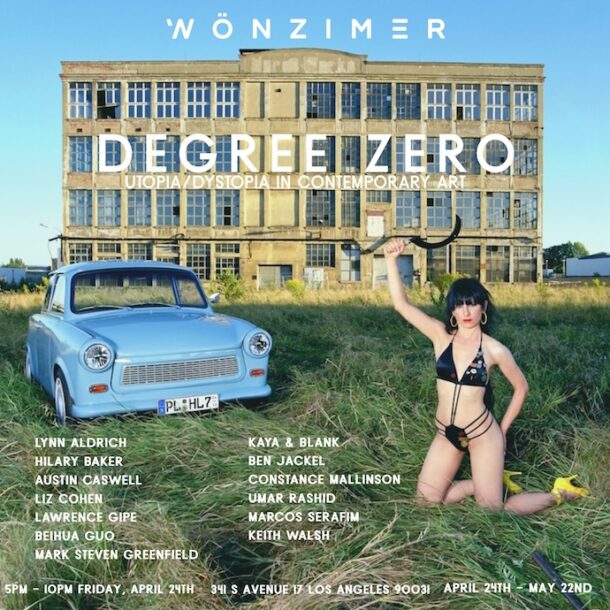
DegreeZero:
Utopia/Dystopia in Contemporary Art
Opening Reception: 5-10pm, Friday April 24th, 2026
Exhibition Dates: April 24th – May 22nd, 2026
Curated by
Lawrence Gipe and Constance Mallinson
Exhibiting Artists:
Lynn Aldrich
Hilary Baker
Austin Caswell
Liz Cohen
Lawrence Gipe
Beihua Guo
Mark Steven Greenfield
Kaya & Blank
Ben Jackel
Constance Mallinson
Umar Rashid
Marcos Serafim
Keith Walsh
Wonzimer Gallery is proud to present “DegreeZero: Utopia/Dystopia in Contemporary Art”, a 13-artist group exhibition organized by artist-curators Lawrence Gipe and Constance Mallinson.
The work presented in DegreeZero exists in the grey area between the oppositional, yet strangely fungible, states of Utopia and Dystopia; this is not an academic exercise, as it this theme might bring to mind the state of contemporary societies caught in, for example, a precarious balance between the ideals of democracy and totalitarianism.
“Traditional views of Utopianism allow us to project ideal, humanitarian societies by imagining what might be but does not yet exist”, writes Mallinson from her essay for DegreeZero. “Without utopian idealism, one risks succumbing to Utopia’s co-equal sibling: Dystopia, loosely defined as the retreat/decline of progress and the prevalence of societies based totally on self-interest and the breakdown of shared goals. War, corruption, suffering, suppression, repression, and hopelessness are its chief characteristics.”
The title DegreeZero refers to an aspect of Roland Barthes’ literary theory called “language utopia”– a proposal from his book Writing Degree Zero positing a textual strategy where “neutrality” roots out gendered, coded and otherwise colonized underpinnings in texts. Barthes offers a “0” degree, a neutral, unbiased method of language that presents its subject as detached from colonialist/gendered roots, existing non-hierarchically. Artists that address utopian notions in their practice acknowledge that dystopia is an integral and simultaneous yang to utopia’s yin.
This group exhibition extends this wide template into the field of contemporary visual rhetoric. The artworks presented align with Barthes aim for more transparency in text, creating spaces for contemplation on the various critical dilemmas facing the contemporary world.
Liz Cohen and Keith Walsh, use the utopian language of propaganda and pop culture to interrogate the allure and promise of Marxist aesthetics. Some of the characters in Mark Steven Greenfield’s re-writing of the sacred “icon” were utopian colony builders, as utopian thoughts propel the protagonists of Umar Rashid’s iconic battle scenes. Marcos Serafim‘s multi-media works describe the dystopian intersections of identity, necropolitics and technology; Ben Jackel and Beihua Guo examine the utopian desires for security that morph into surveillance and the mutually-assured destruction strategies that the military industrial complex promises and delivers; and Lawrence Gipe, Kaya & Blank, Lynn Aldrich, Austin Caswell, Constance Mallinson, and Hilary Baker arrive via diverse media to engage from an ecological perspective – as the many forms of landscape representation in an era of climate change are inextricable from utopian/dystopic engagement.