

Feia is proud to present Poison/Remedy, the debut Los Angeles solo exhibition by San Francisco-based artist Annie Duncan. Set within the intimate domestic surroundings of the Feia Flat, the exhibition brings Duncan’s larger-than-life ceramic sculptures into conversation with the objects, rituals, and private desires that shape everyday life. Oversized flowers, beauty products, and familiar personal objects take on new significance, transforming the lived environment into a space where nourishment and indulgence, vulnerability and desire, poison and remedy exist in uneasy balance.
Duncan’s practice explores symbols of femininity and their talismanic power, drawing from everyday objects associated with the body, art-historical imagery, and the visual language of consumer culture. Her work considers bodily autonomy, self-realization, and the often contradictory expectations surrounding femininity. Within the home, these concerns take on a particular intimacy as objects associated with care, beauty, and self-preservation become vessels for deeper emotional and psychological negotiations.
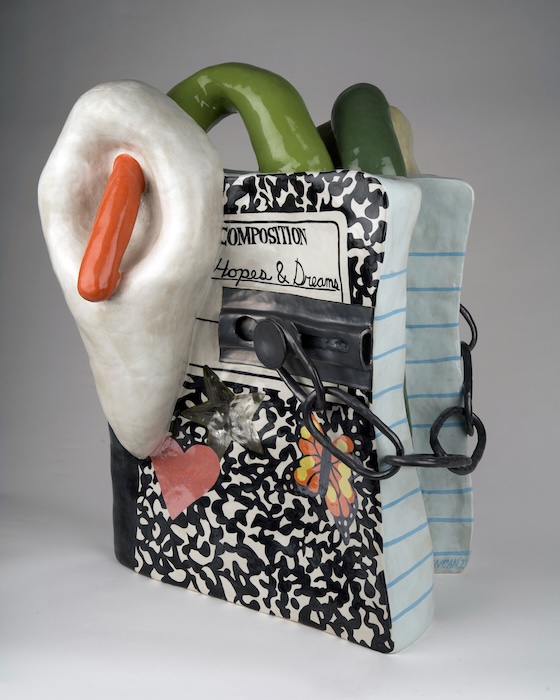
Duncan hand-builds her ceramic sculptures from slabs of clay, creating monumental forms that are deliberately distorted. After bisque firing, she treats each surface as a canvas, using saturated glazes to render illusionistic depictions of the forms’ interiors and exteriors. This trompe-l’oeil approach creates a sense of false transparency, revealing interiors that may be as imagined as they are real. Drawing on traditional still-life painting, cartoons, and the aesthetics of digital consumer culture, Duncan’s work blurs the line between the familiar and the fantastical, inviting closer inspection of objects that might otherwise go unnoticed.
Her recent sculptures of oversized flowers housed in enormous ceramic bottles draw on the symbolism of floral arrangements and the vessel’s capacity to contain, nourish, and preserve. These megaflora become allegories for the female body and psyche, evoking our attempts to nurture ourselves while searching for an immediate remedy to our longings. Against the familiar backdrop of the Flat, their exaggerated scale and vivid surfaces interrupt the rhythms of domestic life, transforming the familiar language of household objects into something at once seductive, absurd, and emotionally charged.
Ultimately, Poison/Remedy considers the vulnerability of our innermost desires, which can feel attainable one moment and impossibly distant the next. Duncan’s sculptures become monuments to the bittersweet experience of longing, striving, and failing. They capture the persistent tension between expectation and reality while interrogating the remedies we invent for ourselves along the way.