

Hollywood has always needed a narrator, because the creation of real-life mythology relies on being understood and, more importantly, being believed. The unscripted stories of backstage life were exclusive precisely because there appeared to be no obvious writer or director pulling the strings; the source material of the movie magazine and the gossip column was the secret and the real. From the 1930s through the 1950s, gossip columnist Hedda Hopper shaped the story of the private life of Hollywood for the public.
For nearly thirty years, Hopper wrote with a kind of veiled power, living proof that access to information was currency in and of itself, as precious and integral to crafting a narrative as any skill of screenwriting. Her columns “Hedda Hopper’s Hollywood” and “From Under My Hat,” ran in dozens of syndicated metropolitan and regional newspapers from 1938 until her death in 1966. At her peak, her audience numbered over 35 million readers. Her career as a columnist mirrored the changing mores of America itself—from the wild, ungoverned sensuality of the silent era to the pendulum swing towards conservatism and the Hollywood blacklist in the late 1940s and ’50s. By the sheer influence of her role as a decisive cultural figure, Hopper could decide who “made it” in Hollywood—and for what reasons. She championed the early careers of film stars such as Joan Crawford and Ronald Reagan, hand-selecting their success in the public consciousness in return for their allegiance, on and off the screen.
The title of Hopper’s Hollywood society column “From Under My Hat” implied a kind of intimate trust between herself and her readers. The motivations of Hedda Hopper could never really be questioned—the scoop was too good. From film sets to dinner parties, from bedsides to funerals, Hopper inserted herself at the crux of the real in a make-believe world. From that raw material she fashioned a narrative that presented itself as the very inside track, the “true story” of a young “movie colony” that needed legibility through publicity and mythology to ensure its endurance more than it needed privacy. If the humanity of the players was a second thought, then again this was show business, and Hedda Hopper was Hollywood’s one-woman Bureau of Vital Statistics.
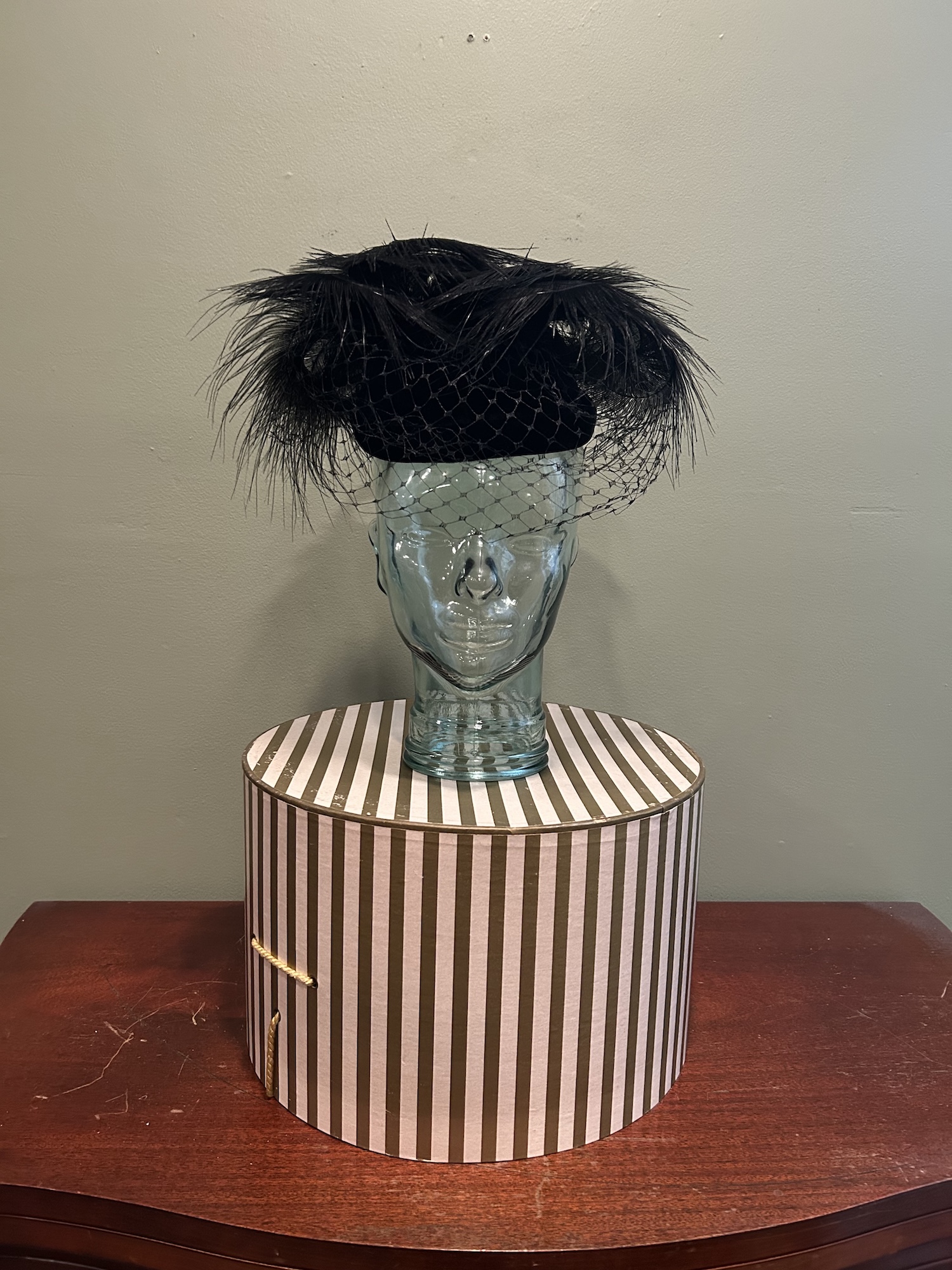
Such a figure needs a strategic silhouette, and Hedda Hopper perfected her signature through a recognizable accessory—her hats. Hedda Hopper owned hundreds of hats, of all varieties: hats for weddings, hats for press conferences, hats for divorces, hats for courtrooms. It must be said that Hedda Hopper wore many hats, and each represented an archetype that she played as well as any actress in her self-written and self-directed script.
Hopper gained the trust and respect of her readers by telling them secrets no one else would, or at least she seemed to. And yet the question emerged—what was the truth? What was a secret, and what was an industry plant presented as a piece of overheard gossip? As her media dynasty unfolded over the next thirty years, a darker question followed—did the truth matter?
On Franklin Avenue in Beachwood Canyon (across the street from the Château Élysée, built in 1929 as housing for film actors and workers and now the Scientology Celebrity Center), Counterpoint Records & Books has stood as an anchor of culture and counterculture since 1979. Outside the landscape changes, the industry changes, but within Counterpoint there is a labyrinth of rare books, dime paperbacks, and records as far as the eye can see. One can be lost in time there, or at least a remix of time past contained in time present. And as a matter of local folklore, Counterpoint also holds the largest known collection of the hats of Hedda Hopper.
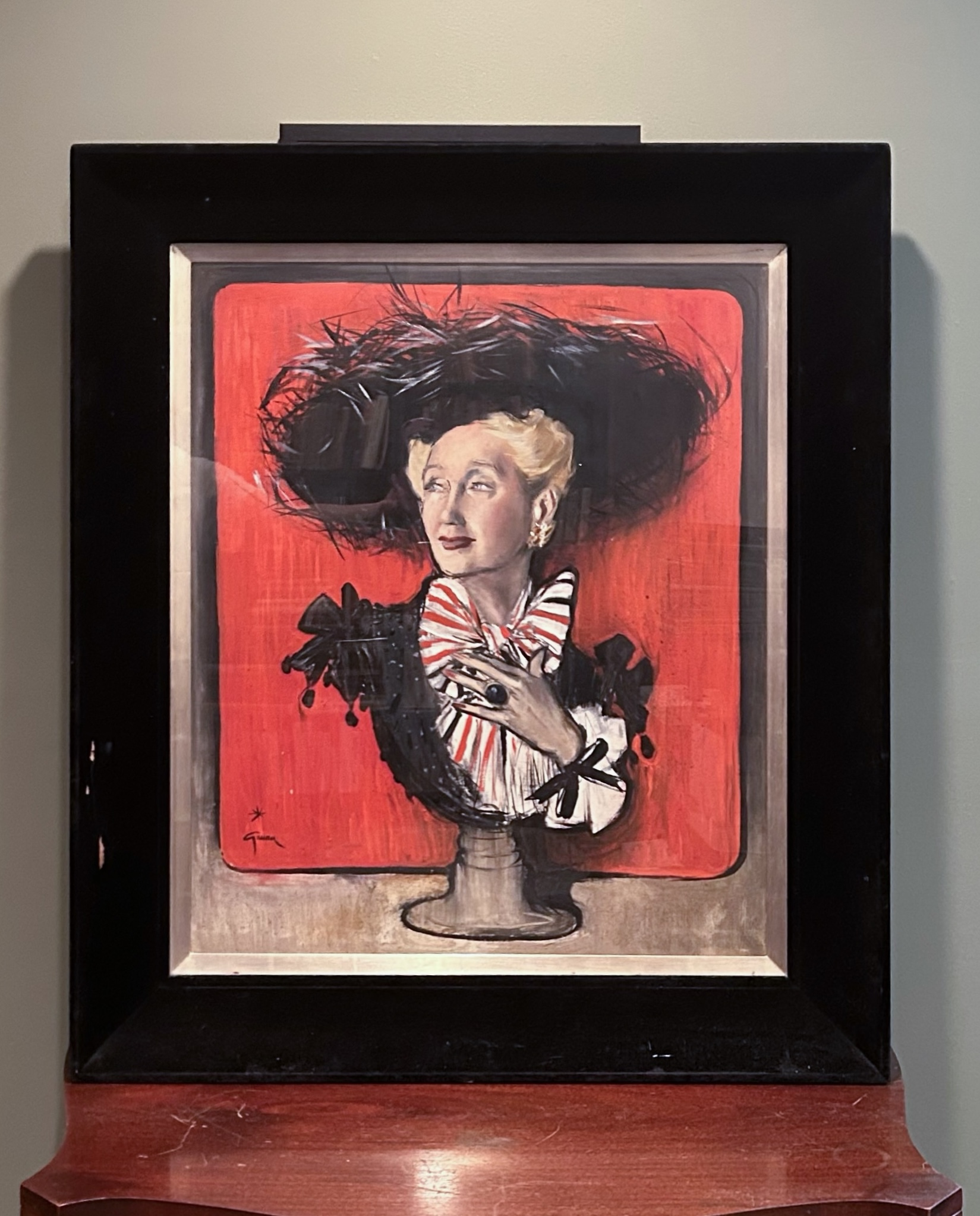
There are nine hats in all, purchased at an estate sale in 1991 by Counterpoint founder and owner Susan Polifronio and her late husband John. In a storage room in the back of the store, amidst stacks of first editions and out-of-print marvels, sits a large painted portrait of Hedda Hopper, illustrated as she saw herself: powerful, seductive, knowing. Her hats sit in their original hat boxes, relics of a bygone era, waiting to be worn again. One with a black mesh and soft sequined veil evokes the funeral of Rudolph Valentino; another large pink hat with a wide brim suggests a summer garden party with Marion Davies and William Randolph Hearst, where she might have heard affairs of state discussed as pleasantly as asking for another iced tea. It is certain that for Hedda Hopper, each hat represented a different social occasion, and thus another secret observed, another scoop, another life illuminated or destroyed.
A defining quality among the Hopper hat collection is the motif of birds—by feathers, by silhouette, but some by the literal incorporation of taxidermy. The most symbolic hat in the collection is a black velvet hat on which is pinned the clipped pale wings of a dove. Hedda Hopper presents herself as a bird of paradise, and yet, she wears her prey. If Hollywood is a jungle, she is an apex predator who wears the spoils of her hunt like trophies. What is beautiful and ornate is also terrifying; it must have struck fear into the hearts of many to see this creature descending into a social gathering—for unlike other reporters or journalists, she did not need to hide. The outlandish nature of her attire made her presence obvious, and thus anything that transpired before her would be fair game. Hopper was a vocal proponent of the Hollywood blacklist, that darkest hour in the 1950s when Hollywood turned on its own like never before and rewrote in human suffering the code of what would and would not be considered appropriate storytelling in Movieland. As it had been with her column for decades, Hopper’s advocation of the Hollywood blacklist represented an ideological narrative that was cast and paid for with human lives.
Alone in the storage room with Hopper’s hat boxes and portrait, I turn off the lights and stand before her belongings, the flash of my camera occasionally illuminating the black feathers and veils like a portal to another woman’s private life. She is there still, waiting for the next story. But in the meantime, justice is served—she will have to wait out eternity in the backroom of a bookstore, her precious hat boxes stored between first-edition Dalton Trumbo and science fiction paperbacks decrying censorship and prophesying the end times. Her spirit is restless; Hollywood is amuck. The narrative thread has been lost, as has its mystery, but so too has the idea that any one person can exclusively control its meaning.
Today the hats look on the verge of new life, expectant; they are in almost perfect condition. As a collection the hats can be interpreted as the most symbolic props to remain from the golden age of Hollywood; they were instrumental in the creation of the character of Hedda Hopper and in the manufacturing of a new kind of media empire. Like any relic of a complex history, the hats of Hedda Hopper ask where they belong now—it seems less dangerous for them to be displayed behind glass in a museum, rather than worn by a figure imitating her path. Polifronio turns on the lights, remarking, “Those hats have been on so many heads through the years now. People that knew nothing about Hedda Hopper, they just loved hats. All those different heads…that alone would get rid of any negative energy. [Hopper’s] wasn’t the last head that wore them.” Whatever secrets Hedda Hopper had under her hat are now available for purchase. Polifronio looks at the wings of the dove, frozen in mid-flight on the crushed velvet. “I haven’t tried them on. I’m not a hat person.”