

Curated by Alexandra Baraitser and David Leapman
Artists: Nick Aguayo, Alexandra Baraitser, Carlos Beltran Arechiga, Trevor Burgess, Simon Callery, Clem Crosby, David Leapman, Heather Gwen Martin, Ty Pownall, Jane Pryor, Evan Thomas, Steven Wolkoff
Chlorophilia is an exhibition that explores the complexities of green and the spectrum of colors that relate to it. From the moment we are born we engage with greenness and learn about the natural world around us. Green calms with a freshness and vitality that reminds us we are alive and is often the first sign of life.
The pigment chlorophyll is essential to photosynthesis, the process by which green plants and some other organisms use sunlight to synthesize nutrients from carbon dioxide and water. It is this extraordinary science (the miraculous process of photosynthesis, plus the beauty of the tint and the aura of green that is the focal point for the artists here.
The word chlorophilia means an ‘attraction to’ or ‘desire for’ green or green plants and derives from the Greek chloros (pale green) and philia (love). However green is not always viewed in a positive light: Scheele’s Green, also known as Schloss Green, was invented in 1775 by chemist Carl Wilhelm Scheele but has since fallen out of use because of its toxicity. In addition to being used when manufacturing Victorian wallpaper, green paint was widely applied to twentieth century racing cars, even though green cars were notorious for being unlucky (this was probably due to a number of green cars being involved in racing accidents). Green is a hue with a reputation for being difficult: a tint to be avoided and to be wary of. Historically this popular pigment was once desired and chosen for the palette: the female figure in the Arnolfini portrait by Jan van Eyck shows a merchant’s bride in expensive and rich green robes. Green was generally symbolic of wealth and prosperity. Whilst artists from the Renaissance, when it was fashionable to depict naturalistic subjects, painted landscapes packed full of symbolism, still lives from the Netherlands featured bouquets of flowers metaphorical of life and death. Later on the green pigment viridian was used in dozens of works by Vincent van Gogh, including Café Terrace At Night and The Night Café. Many contemporary artworks make green statements that highlight concerns regarding political and social subjects. For example, environmental art such as Olafur Eliasson’s Iceberg touches on ecological ideas.
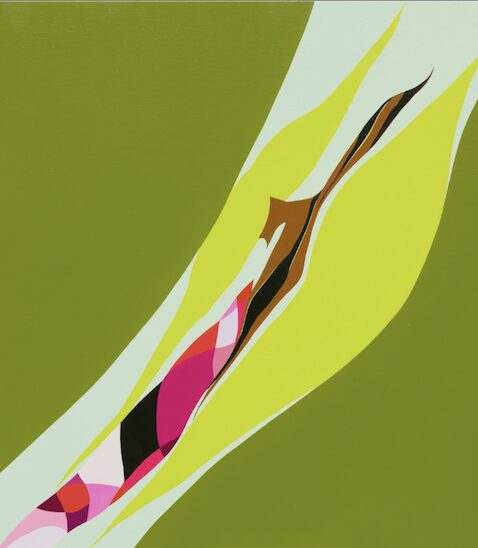
Chlorophilia brings together a group of artists who present a new perspective of their relationship with the green hue. From Heather Gwen Martin’s powerful greens to the nebulous opacity of greens dominating Evan Thomas’s abstracts, the contemporary artists in this show explore their own version of green, embracing all its attributes good and evil. After the uncertainty of Covid lockdowns, green can speak to us in reassuring tones of hope and peace. Indeed green is symbolic of stability, endurance and growth, and through the harnessing and utilization of green the artists can demonstrate that this color is worth celebrating.